The use of robotics and automation (R&A) technologies in Singapore, such as the painting robots and autonomous tower crane for public housing projects, shows how far the local construction industry has come. These advanced solutions are changing the way contractors build, significantly improving productivity, safety and sustainability on the jobsite.
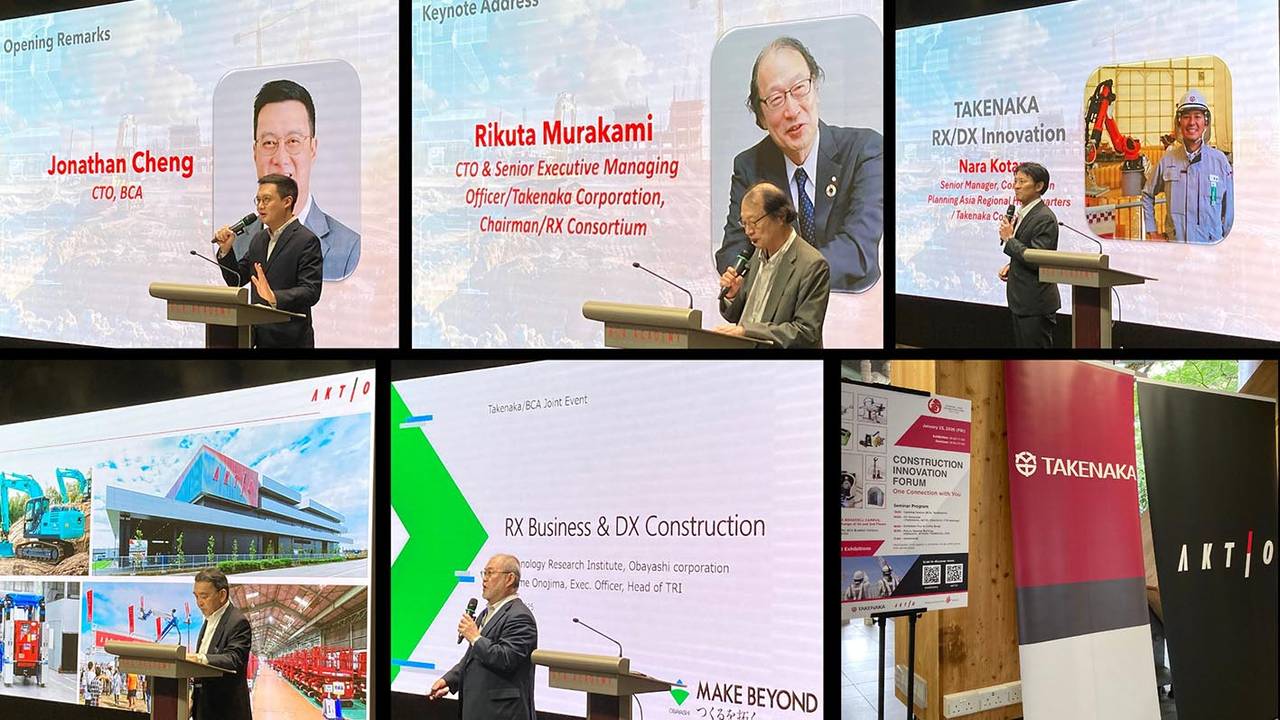
This year, Singapore’s construction demand is projected to stay strong, reaching S$47-53 billion, and an average of S$39-46 billion is expected over the medium term. “It’s a pretty high number for us, which means there’s going to be a lot of activities going on, but also many opportunities for us to raise productivity, drive sustainability, digitalisation, etc,” said Jonathan Cheng, chief technological officer at the Building and Construction Authority (BCA) during the Construction Innovation Forum 2026.
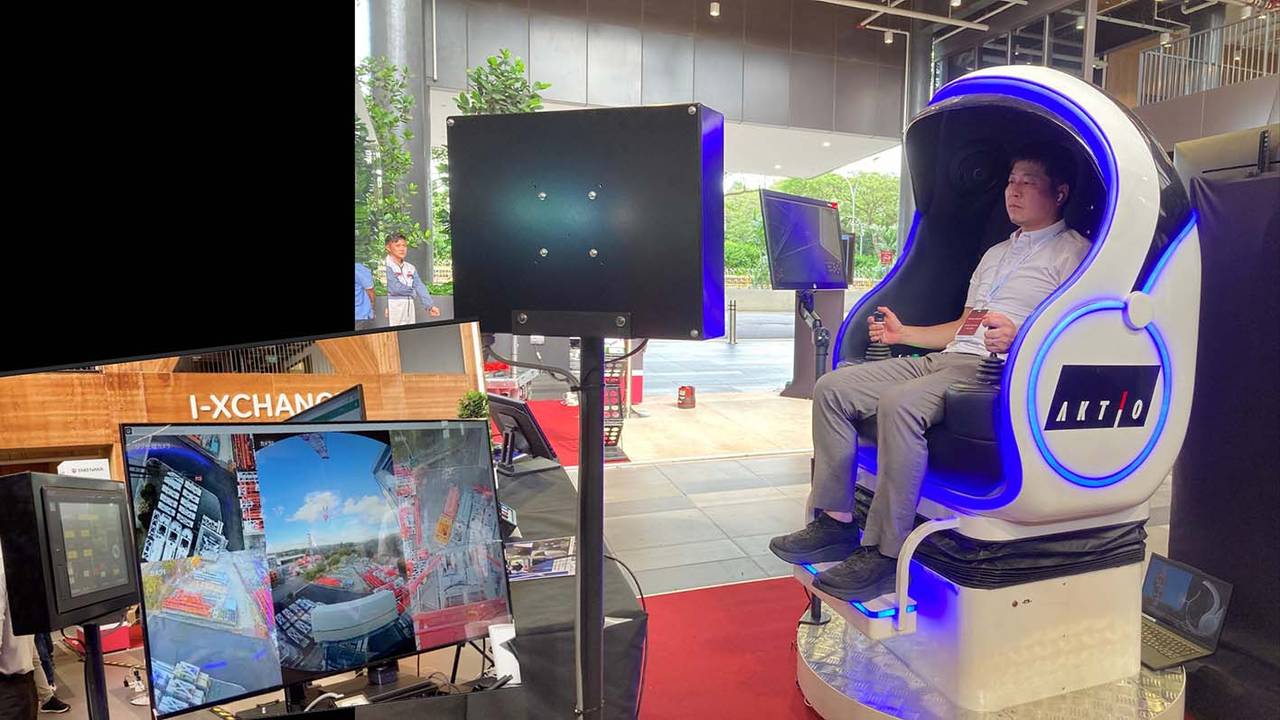
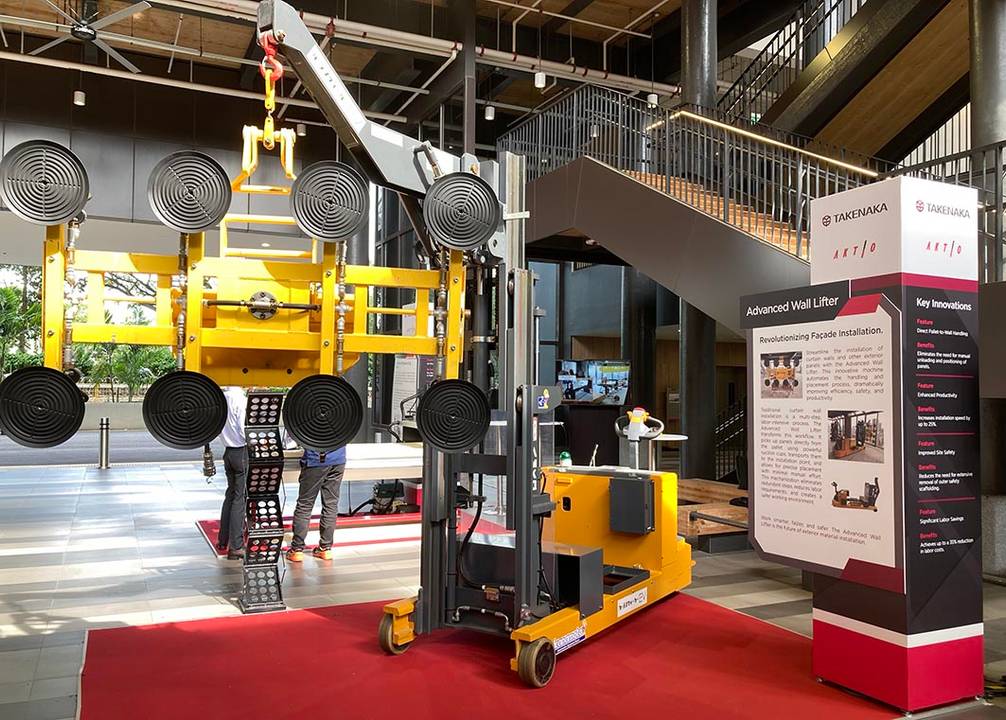
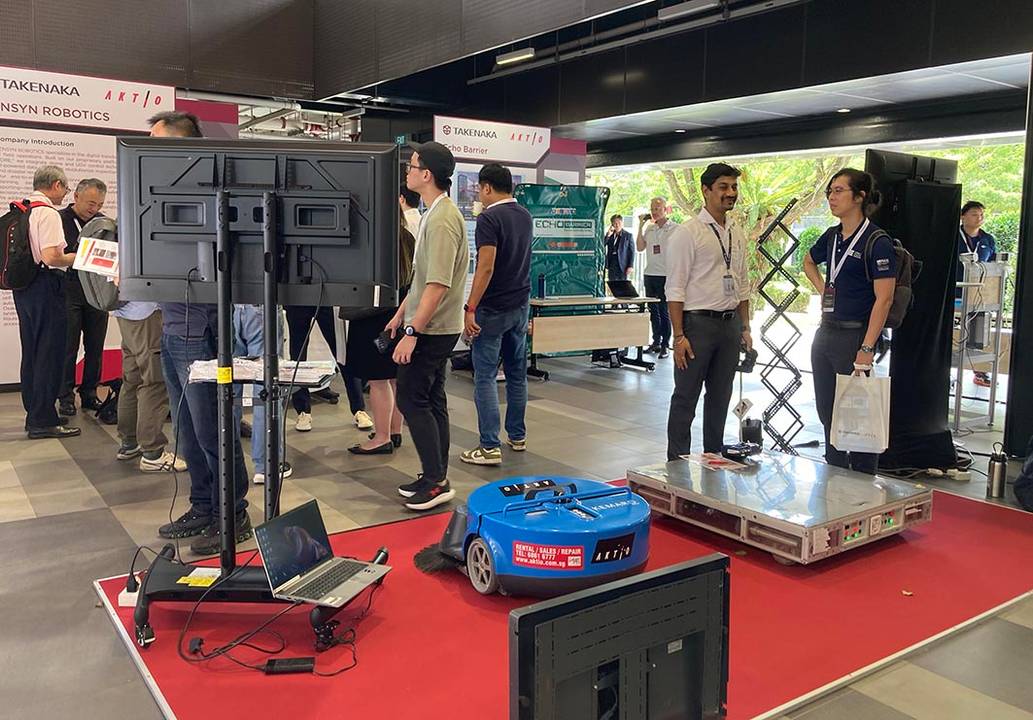
The Forum, held on 23 January at the BCA Academy Braddell Campus, was organised by BCA in partnership with Takenaka Corporation, Aktio Corporation and the RX Consortium. Besides attending the seminar, participants were also able to see a variety of Japanese construction innovations and R&A technologies, including a tower crane remote control system, curtain wall installation machine, material handling equipment, cleaning and marking robots, and indoor drones, to name a few.
“There will be some support for companies to adopt these solutions,” said Mr Chen, referring to the new tranche of Productivity Solutions Grant (PSG) that was recently announced by Singapore’s Minister for National Development. The grant has been expanded to incorporate advanced equipment such as R&A, and will be available from 1 April 2026.
At the Forum, a number of Japanese companies shared their experiences and insights on adopting R&A solutions and discussed the future of the technologies. (Scroll down to the bottom to view a quick video and more photos of the event).
Industry transformation through collaboration
Like Singapore, Japan’s construction industry is currently facing critical challenges. Among them are severe labour shortages and ageing workforce demographics, high physical demands and safety risks in construction work, increasing project complexity and quality requirements, pressure for faster delivery and cost efficiency, and the need for sustainable and environmentally responsible construction, shared Kotaro Nara, senior manager for construction planning at Takenaka’s Asia regional headquarters.
To help solve these challenges, “the construction industry needs to move away from the ‘3D’s’ – demanding, dirty and dangerous – and transform into a workplace that offers highly productive, attractive and rewarding work,” said Rikuta Murakami, senior executive managing officer and chief technology and digital officer at Takenaka, who is also chairman of RX Consortium.
Mr Murakami stressed that “to enhance the attractiveness of the construction industry, it is important for everyone to collaborate and work together in a co-creative manner.”
“Transforming the construction industry cannot be achieved alone,” added Mr Nara. “Designers, builders, robot manufacturers, and startups must come together to form a powerful ecosystem.”
The collaboration among Japanese construction industry stakeholders is evident in the establishment of RX Consortium, which already has over 300 member companies. These comprise contractors and sub-contractors, rental and machinery companies, trading businesses, and more. They work together to revolutionise the industry through the development of construction robots and digital technologies.
One innovation from the consortium is the tower crane remote control system ‘TawaRemo’, developed by Takenaka in partnership with Aktio and Kajima Corporation. It aims to provide a better, more comfortable working environment for the crane operators, as they don’t need to climb up to the high-altitude cab.
By installing the system on compatible tower cranes, the operators can control all functions from a remote cab on the ground. For a short-distance remote operation within the jobsite, it is possible to use a local network such as a wired or Wi-Fi line.
Mr Nara said the future vision is to operate cranes from outside the construction site, and for this, collaboration with relevant authorities and establishment of regulations (e.g. safety regulation) are important.
Another innovation is the ‘Advanced Wall Lifter’, introduced Mr Nara. The machine streamlines the installation of curtain walls and other exterior panels. It requires “less workspace, less preparation and less workload” compared to the traditional method.
Mr Nara also mentioned that deploying digital construction technologies will involve having a new job category on-site, construction robot platform and collaboration with global technology providers.
“It is our mission to advance robotics technologies in harmony with digital platforms and improve productivity and safety across construction sites,” affirmed Mr Nara.
Meanwhile, the semi-automated robotic transport dolly ‘Movilo’ has been jointly developed by Aktio, Obayashi Corporation and Sakai Denki. It is available for use in Singapore.
This robotic dolly features a load capacity of up to 1,000 kg and is easy to control, shared Shigeru Oishi, head of overseas department at Aktio, a global equipment rental company that offers rental and consulting (‘rensulting’) services.
According to Hajime Onojima, executive officer and head of Technology Research Institute (TRI) at Obayashi, Movilo is “simple to implement, making it an ideal first step towards site robotisation.” The unit is compact and lightweight (270 kg), “allowing it to slide under loads for easy loading. Plus, it is easy to operate with a game-like controller, and can overcome steps on-site and move freely in all directions (360°).”
Mr Onojima further highlighted Obayashi’s PLiBOT (pliability robotics platform) business, which provides multiple autonomous mobile robots (AMRs) for tasks such as transportation, cleaning and security. In addition, it offers a service that centrally manages these robots through a single integrated control platform.
Obayashi set up its Construction-Tech Lab in Singapore in 2024, serving as the company’s overseas R&D base for the Asian region. It focuses on advanced technologies like 3D printing and R&A, through partnerships with regional industry players and educational institutions.
Reiterating the importance of collaboration, Mr Onojima said, “To transform the construction industry, we must first transform ourselves – shifting from competition to co-creation (collaborative harmony).”
Challenges and opportunities
As R&A technologies are relatively a new area in construction, their application still poses many challenges for contractors. Mr Onojima revealed the gaps found during Obayashi’s robot deployment practices. “It is unclear what checks are considered necessary and sufficient when implementing robots,” he said.
“Even if certification is not required, the lack of explicit confirmation creates concern at the operational level. Also, design principles suitable for construction robotics are not yet consolidated.”
With that in mind, Mr Onojima believes a technical reference is needed for construction robot deployment. “We propose forming a working group for the technical reference.”
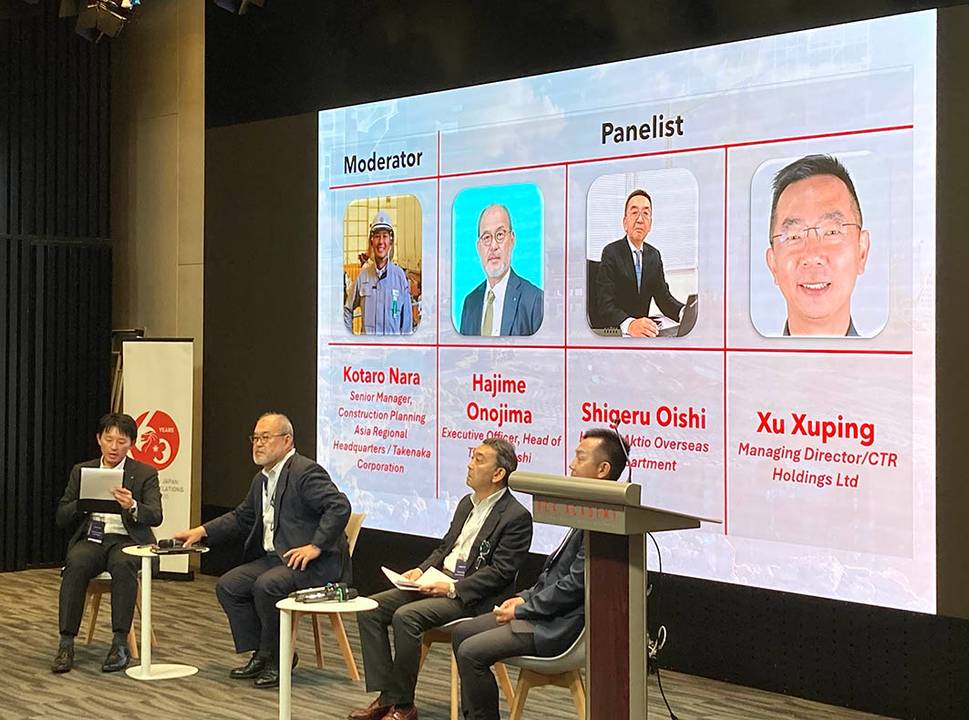
During the panel discussion, Xu Xuping, managing director of CTR Holdings Ltd – a Singapore contractor specialising in structural engineering and wet architectural works – talked about challenges and opportunities in the local market.
Approximately 50% of new BTO (build-to-order) public housing projects in Singapore now utilise automated finishing systems, noted Mr Xu. Examples of such solutions include robots for painting, skimming, tiling and grouting. Semi-autonomous excavators and ‘machine guidance’ cranes are also deployed on some major sites.
However, several obstacles remain. “Robots are perfectionist, but construction sites are not,” said Mr Xu, calling it a “precision gap”. Bringing robots into a lift is another difficulty. “Think about how hard it is for people to squeeze into a crowded lift; now imagine robots try to do it autonomously.”
“Robots are also a massive investment and smaller companies feel the financial pinch the most.” For this, Mr Xu shared that CTR has tapped on the BCA grant to help reduce the cost of its robots.
He added that “we have the robots, but not the ‘pilots’ – there is a massive skills gap in the current workforce. We need to have a trained robot supervisor. Moving forward, I think we need a more digitalised workforce.”
Lastly, Mr Xu pointed out “the risk of getting hacked. Now that the building sites are connected to the cloud, they have become cybersecurity targets.”
For Aktio, safety training courses are necessary to ensure proper use of the equipment and prevent site accidents. As robotic technologies increase and their adoption becomes widespread, Mr Oishi encouraged the industry to address laws and regulations in this field.
“For example, in the case of TawaRemo [tower crane remote control system], it would be very dangerous to simply allow operators with just a tower crane operating licence [to carry out the operation],” said Mr Oishi. “I think we need to discuss initiatives for new qualifications based on systematic training.”
Exploring the future of R&A technologies, Mr Oishi emphasised that “it is very important to think and nurture this sector from a longer-term perspective. We will continue to work with government agencies, BCA, and the consortium companies to solve any problems and move forward together.”
“I think the future isn’t being built by robots alone, but it’s being built by firms and companies that know how to use robots, and lead them,” said Mr Xu.
Note: The new tranche of BCA’s Productivity Solutions Grant (PSG) will be available from 1 April 2026. It has been expanded to include advanced equipment such as robotics & automation (R&A). More details here.